
Introduction
Nestled high in the Himalayas, Kedarnath Temple is one of the most sacred pilgrimage sites in India. Dedicated to Lord Shiva, the temple attracts lakhs of devotees every year despite its challenging mountain location.
However, what truly captured the world's attention was the devastating Uttarakhand floods of 2013. Entire villages were destroyed, roads disappeared, and thousands of lives were affected. Yet amidst the destruction, Kedarnath Temple stood strong.
Many devotees consider it a miracle, while others see it as a remarkable example of ancient engineering. Whatever the explanation, the story of Kedarnath Temple continues to inspire millions.
The History of Kedarnath Temple
Kedarnath Temple is believed to be over a thousand years old and is one of the twelve Jyotirlingas of Lord Shiva.
Located at an altitude of over 3,500 meters, the temple remains covered in snow for a significant part of the year. Despite harsh weather conditions, the structure has survived centuries of natural challenges.
According to tradition, the temple is associated with the Pandavas from the Mahabharata, who sought Lord Shiva's blessings after the Kurukshetra war.
The 2013 Disaster
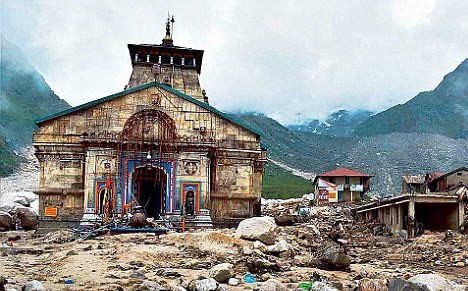
In June 2013, Uttarakhand experienced one of the worst natural disasters in its history.
Heavy rainfall, cloudbursts, and flash floods caused massive destruction across the region. Huge amounts of water and debris rushed through the Kedarnath valley.
Buildings around the temple were swept away, and the area suffered unimaginable damage.
The Giant Boulder That Changed Everything
One of the most remarkable aspects of the event was a massive boulder that came to rest behind Kedarnath Temple.
This giant rock diverted the flow of water, mud, and debris around the temple structure.
As a result, while the surrounding area faced severe destruction, the temple itself remained largely unharmed.
Today, many pilgrims visit the site to see this famous boulder, often referred to as the "Divine Rock."
Faith and Science

For devotees, the survival of Kedarnath Temple is a sign of Lord Shiva's divine protection.
Engineers and geologists, meanwhile, point to the temple's strong stone construction, elevated foundation, and the role of the giant boulder in protecting the structure.
Regardless of perspective, the event remains one of the most extraordinary stories in modern Indian pilgrimage history.
Why Millions Continue to Visit Kedarnath
The temple is not only a place of worship but also a symbol of resilience, faith, and hope.
Pilgrims travel through mountains, changing weather, and difficult terrain to seek blessings at this sacred shrine.
Many describe the journey itself as a spiritual experience that stays with them forever.
Conclusion
The story of Kedarnath Temple's survival continues to inspire people around the world. Whether viewed as a miracle, an engineering wonder, or a combination of both, the temple stands as a powerful symbol of faith in the heart of the Himalayas.
For devotees and travellers alike, Kedarnath remains one of India's most unforgettable spiritual destinations.